

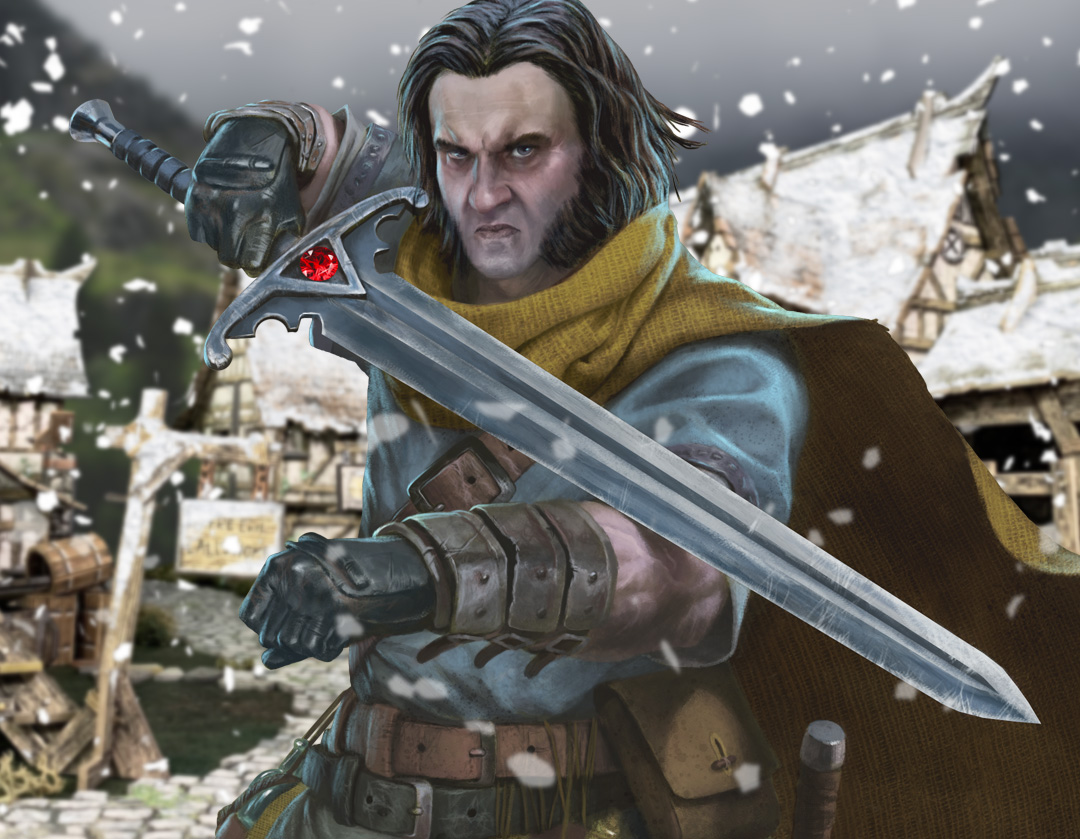
Welcome armchair traveller, to this ongoing deep dive into the lore of Core Space and Maladum. I’m Wayne from Battle Systems, hello.This week we’ll be continuing our closer look at the geo-politics of Enveron, how the kingdoms affect each other and what troubles may arise in the future.This is the second of a two part series, if you’ve not read the first part you can find it here.
Also, you can follow along on our map of Enveron here.
THE MIDDLE KINGDOMS
Some of the more central territories regard themselves as the Middle Kingdoms, probably in a vain attempt to curry favour with Khaara, the first kingdom to pronounce itself as the heart of Enveron.
DISPUTED TERRITORIES
This area has long been fought over between Khaara and Wega for its mineral wealth but recent alliances have left the territory vulnerable to outside influences. This impasse allowed a Malagaunt to install themselves within the ruins of Duhn-Linn Keep and proclaim themselves as master of the Northern Meera mountains. Troops sent from both Khaara and Wega to remove the pretender never returned. A band of Adventurers claim to have routed a cabal of Malagaunt from the Keep and both Khaara and Wega have been quick to reclaim the area for themselves with neither kingdom likely to back down, their fragile alliance now at breaking point.
FORBIDDEN LANDS
A territory that is not disputed lies central in the Meera Mountains. Neither Khaara or Meera Province, the two kingdoms bordering it, have laid claim, the locals don’t even like to look upon it thinking it cursed. This is the Forbidden Lands, where no man or Kindred creature dwells. (This falls outside of my remit of geopolitics as there is no power play here but indulge me a moment as the Forbidden Lands are unique to Enveron and worth an armchair visit!)
From the plains of Khaara and Meera Province the mountains rise up to a plateau as if the top of the mountain range has been sheared off. Scaling the steep slopes are a profusion of greenery unlike any seen on Enveron. A lush belt of wildlife boasting colossal beasts and giant flora and tropical temperatures where neighbouring mountains of the same height bear snow. Anyone foolish enough to brave the heights would have to hack through miles of dense woodland and watch in disbelief as members of their party are picked off by fell beasts. This unhappy Adventurer may eventually find themselves, dishevelled and on the brink of collapse, at the lip of the plateau where the lush wildlife falls away suddenly to be replaced with desolation, the land collapsed a quarter of a mile below their feet into a cheerless, sunken swampland. The vegetation is sparse and stunted as are the native creatures which are strange and warped, their offspring all bearing marks of corruption such as boneless limbs or a single eye, insanity and a shortened lifespan. Any creatures not native to this region will die within days from the ‘creeping sickness’. The Adventurer will probably succumb to madness before that as they are assailed by distortions in time and space. If by some miracle they make it to the centre of the swampland they would find nothing but a vast pit, the light unable to penetrate its inky depths. You can probably see why we’ve not set any quests here!
KEL
Kel is a beautiful kingdom, verdant, with a forgiving sea to the east, a protective mountain range to the west and lush forests in between. Kel is also home to its nomadic gatherers, the Kelthion Outlanders, who travel the kingdoms in search of local knowledge and are highly regarded for their skills in medicine. Although the Outlanders are lauded abroad they are resented in their home country. Despite being formidable warriors they chose a nomadic life instead of guarding their borders, which the kingdom of Donnel was able to exploit.
Nestled below the Donnel mountains and flanked by forests abides the city of Kelthion. From a distance it is breathtaking, its banners fluttering in the breeze upon high towers. Medicinal herbs are plentiful in the markets and tools and potions can be found in small but exclusive shops in the town centre. The streets are clean and well kept but for the Lowers, a district of thieves, the dark heart of Kelthion.
On the surface Kel is prosperous and beautiful but just below bubbles resentment towards Donnel, the kingdom it must pay tribute to. Many note that Donnel’s power is waning, their military might not as it once was and the river Talos, separating the kingdoms, is now at its highest which would make an outright invasion from Donnel near impossible, especially if someone were to block or destroy the bridges. Donnel knows that its grip on Kel is tenuous but its pride will not let it admit the truth, and for decades to come it will insist that Kel is its terriotry and draw its maps accordingly.
MEERA PROVINCE
Meera Province is a kingdom to the north of its namesake Meera. It is rich in produce and has a thriving trade along the river Enno. Loudly in public, the Province proclaims itself independent, but quietly sends regular tribute to its mother state. It is a subjugated kingdom, its former name of Gwynn is forbidden on pain of death, as is its native tongue.
The capital city is Amber which has a loud, boastful swagger to its citizens but a sharp eyed visitor could not fail to notice that even the wealthy have threadbare clothing and any ostentatious flair seems forced. The northern province is entirely in thrall to its southern counterpart and there is bad blood between the two. Separatists use the forbidden language of Gwynn to talk of rebellion although little is done as the citizens live in fear of reprisal. And that fear is justified, as the brutal suppression has been seen within living memory. Tired of being second class citizens the provincial town of Mirewood plotted revolt. Spies reported back to Sorith, the capital of Meera, and troops were sent to ruthlessly quell any rebellion. Every living creature was put to the sword and the remains burned to the ground along with the forests and farms nearby. Over time the forests have reclaimed the town and it was forgotten by Meera but not by Gwynn.
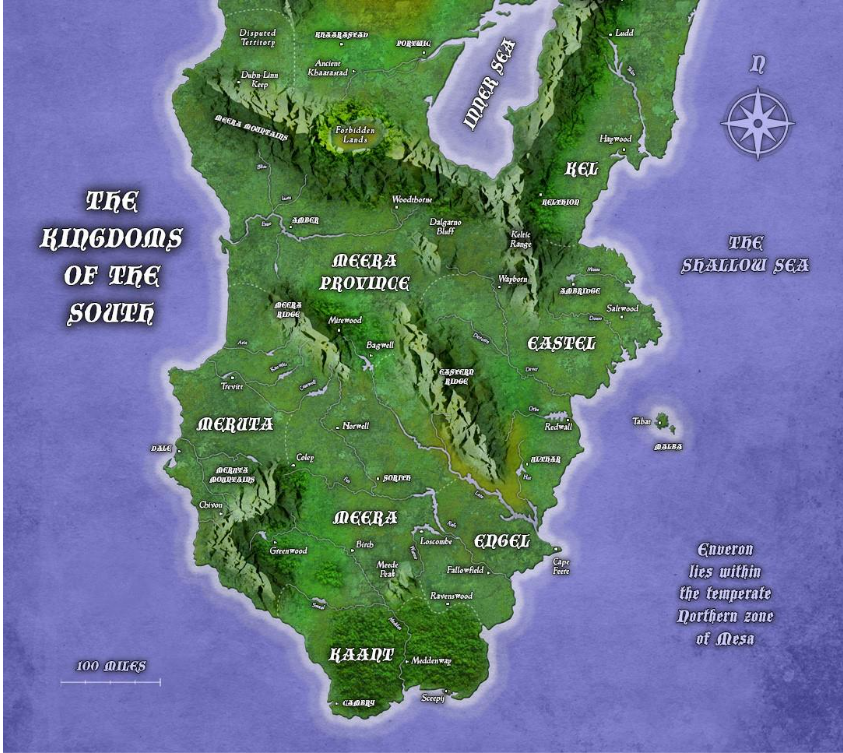
THE KINGDOMS OF THE SOUTH
Most of the kingdoms south of the Meera Mountains and the Keltic Range proudly call themselves the Kingdoms of the South. The only exception is Meera Province and even there many consider the adoption of the Middle Kingdom moniker as nothing but undue deference to a rich northern kingdom with airs and graces. The pride of the Southern kingdoms doesn’t seem to be based in any objective reality, the history of the south being no more laudable than the history of the north.
EASTEL
Another province of Donnel, but in name only, Eastel has long since broken ties with its homeland. It is a prosperous land known for high crop yields, intensive fishing and for having a legal slave trade. This has long been a cause for conflict with neighbouring Engel, also formerly a province of Donnel but with a much longer memory of being under the lash. Ambridge, the capital, is prosperous, vibrant and a hub for artisans and traders. The only mar is its burgeoning slave trade which is archaic but doesn’t seem about to end any time soon. Other kingdoms have their own forms of slavery, normally in the form of serfs being property of an estate. Outside of Eastel the wholesale buying and selling of people and kindred is considered repugnant except to the extremely rich and powerful.
Eastel is also home to the largest communities of Dwella who are a dying race. Less children are born each year and no one knows why although there’s plenty of speculation. The ancient city of Wayborn is located deep within the mountains of the Keltic Range. The Dwella of old abided here, the stony ground carved level and the walls chiselled into even planes. A crack within the mountains illuminated the city far below. The Dwella abandoned the city and all that remains now is a hamlet of the same name although no Dwella live there, instead they are scattered amongst the kingdoms of Enveron.
MALBA
Comprising of two small islands in the Shallow Sea Malba is technically an independent kingdom but with a small population and relatively poor farmland it struggles to maintain its economy and is forced to have unfavourable trade deals with nearby Eastel. There is much resentment towards Eastel amongst the common people who feel that they have been annexed by stealth. Tabat is the capital, once an impressive fortress city, but it has been in decline for decades. Once lush and green Malba has become a desert due to the increasingly dry and hot climate. Crops often fail and the locals must depend almost entirely on fishing to survive. Rumours of ‘fabulous wealth’ buried in the deserts is met with scorn although there is evidence that there are lost cities under the shifting sands.
ENGEL
The poorer cousin of Eastel, Engel seems to base all of its policies on being as little like Eastel as possible. It openly supports escaped slaves and will undercut trade deals between Eastel and other states whenever it can. However, due to political marriages the two provinces maintain a peaceful but strained relationship.
The Thane of Ulthar, the capital, is an old, tired man wishing only to pass the reins to his offspring. Over the last few years many of the blood ties between the two nations have been broken as nobles from both sides have died in suspicious circumstances. The Thane suspects that this is an act of sabotage by Eastel, forces within hoping to break ties with Engel and start a war.
The port town of Redwall was built on top of a much older settlement, once the capital of Engel, most of which is now submerged under the river Orbe. However, parts of the old town can still be found in the surrounding area, with rumours of hauntings keeping the superstitious locals from ransacking any valuables that might remain. Superstition plays a great part in the daily life of Engel controlling more aspects than the rulers would like.
MEERA
Rich in crops but relatively poor in mineral resources Meera concentrated its military might in conquering the kingdom of Gwynn. This kingdom has been subjugated for nearly a century but Meera now fears that its grip on that province is weakening.
The capital of Meera is Sorith. It is clearly a wealthy city but one allowed to decline, once proud edifices allowed to crumble while, newer, cheaper structures replace them. The city as a whole feels tawdry, Guilders are all that matters here, pride in craftsmanship scorned in pursuit of wealth. The powerful Guilds have full control of Sorith, the king a weakling, his council impotent. The merchants are not particularly patriotic and as advocates of free enterprise they are happy with the weakened power structure. This has allowed the township of Norwell to gain strength. Norwell is strange as it has nothing of actual worth to trade. It does, however have several banks that specialise in the trade of different currencies, and the new, paper currency that is starting to appear in many kingdoms. Norwell resembles a fort more than a town with many armed militia patrolling the streets. Backed by the Guilds of Enveron they are attempting to make Norwell not only the head of commerce of Meera but the whole of Enveron.
Bagwell is a growing border town that seems to thrive on the dissent between Meera and Meera Province, trading on tax breaks and making a profit on the inflation differences. However, unlike the recently devastated Mirewood Bagwell is keen to ingratiate itself with Sorith and sends constant tribute and is especially generous when bribing high bureaucracy and their officious underlings.
MERUTA
A kingdom of two very different peoples, the cheerful fishermen and farmers of the north and the dour mountain men of the south. Kings have tried to unite the people but they insist on ignoring each other. Dale was once a prosperous fishing village that grew and grew and became the capital almost by accident. There is almost always a local festival going on as the locals have much to celebrate. Visitors are at first beguiled by the party atmosphere but it soon pales after a week of merry making. Luckily for the more adventurous there is some relief in the nearby abandoned villages and keeps complete with monsters, the perfect antidote for too many good times!
In stark contrast to Dale the men of Chivon are a dour lot. As stony as their mountains, they will accept a visitor’s money but not their company. It’s possible to trade with the mountain men but don’t expect a warm welcome, strangers will have to make camp in the wilds.
KAANT
Most of the locals don’t recognise that they are part of any state, ignoring any taxes or laws
imposed on them. Kings come and go on a regular basis, many despairing of the ignorance and rugged individualism of the populace. Meera and Engel have both tried to subjugate Kaant over the centuries with little success partly due to the dense woodlands but mostly due to the denseness of the locals.
Cambry is a good sized city where the people seem less taciturn than the forest folk and perhaps more cosmopolitan. This is an illusion, the city folk are as stubborn as their forest fellows and merchants have torn their hair out trying to strike trade deals. The people of Kaant have very little interest in the outside world and care nought for trade deals, they have everything they need. Most of their life is centred on forestry or on the rivers and the locals are often unfriendly and suspicious of strangers. Many of the port towns have been allowed to rot as trade moved elsewhere and the people resorted to fishing and scavenging roots from the forests. None seem particularly happy with their lot but neither do they seem unhappy, they only ask to be left alone.
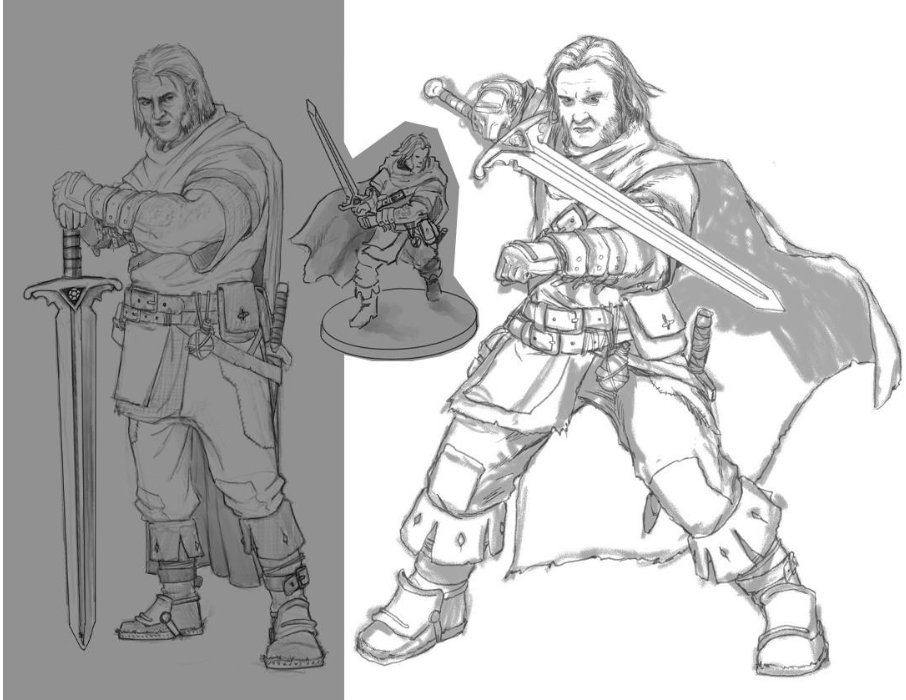
WINTERFALL IN GWYNN – A MALADUM SHORT STORY
The boat from Woodthorne to Amber took days. Sheridan didn’t care, he sat morosely on the rain spackled deck as the crew stopped every few miles to load and unload at the villages and towns downriver to the capital. He had spent his last few coins as a passenger and had no plans beyond that of reaching Amber. He had lost everything and everyone and the crew kept their distance, fearful of this sullen brute of a man. He was a sellsword and a wanderer with no allegiance although he had been a soldier, once. Now he took payment where he could, gave fealty to those who would pay for it, took risks daily. The last risk had failed as often happened to those who played dice with the gods.
He spent the days on the small boat facing the mist laden shoreline but not really seeing, nursing a bottle between his rough hands. He spoke little and heard little and Amber was a shock when they pulled ashore. It was loud and bustling, a rude awakening for a man who had spent time alone with his thoughts. He stumbled from the dirt tracks of the docks to the cobbled streets within the city, unsure of where to go. A native of Khaara, he wasn’t familiar with Meera Province, his short time there spent with his companions who knew the area well.
He found an inn and made his way to a table in the corner. The innkeeper approached warily and Sheridan pulled his cloak over his weapons, this was a civilised town and men like him needed to blend in. He was aware of how roughly his clothes had fared and how unwashed he must appear to the innkeeper with his almost clean apron and scrubbed clean face.
“What will this pay for?” He asked removing a ring from his finger. The innkeeper looked at it with a practised eye. “Two days bed and board. Are you looking for work?” Sheridan nodded although the last thing he wanted to do was swing a sword. He just wanted to sleep and drink and forget. “Constabulary are looking for a few stout lads. Talk of insurrection needs stamping on, so I hear.”
“Anything that doesn’t involve threatening people?”
“There’s probably work at the docks but that’s been stitched up by the guilds. You don’t look like a guildsman to me. You stick to the threatening.”
He needed money and would run out of trinkets to pawn soon enough. The constabulary was run by a jowly, unkempt man who treated Sheridan with suspicion but could clearly see his qualifications. Even if he’d stowed his weapons and dressed as a rich merchant the straight back and military air would give him away. The good sword and the patched clothing said that he was a soldier of fortune and his fortunes had run dry. The constable held up a coin, a down payment with the promise of more to come.
“There’s been a lot of tough talk about breaking away from the south. Sorith isn’t happy and we’re to deal with it before they do.” Sheridan knew little of the local politics, only that Meera Province had once been its own kingdom and there were plenty who felt that it should become that again. Sheridan didn’t care and took the coin from the constable. “Just tell me who to hit.” He said.
* * *
The rains made way for the chill winds as the winter settled in to stay. The last crops had been reaped, the men of the fields and the fishermen spending their time in the taverns, the townsfolk preparing for the coming festivities. Most kingdoms celebrated the end of the year as would Meera Province in a three day Winterfall, a feast before the hard times. Sheridan had experienced both good and bad winters in Khaara, good when his father had brought home the sweet meats and dried fruits, bad when there was no money for either and his family went to bed hungry and he lay awake hearing the candlelit singing of more prosperous families. Even as a grown man this time of year was bittersweet to him. Last year he had feasted in a far away kingdom, celebrating the routing of revenants with his companions, adventurers who lived by the sword and their wits, the dangers high but the rewards oh so higher. Now the last of his friends were gone in a disaster that had cost them dear, and one he had barely escaped from with his life. His current companions were a sullen lot who spoke little and said less when they did speak. The work was easy and the pay was good, it mostly involved breaking up crowds and being a visible presence where needed. He hadn’t unsheathed his sword once and had used his cudgel only twice, both times merely as a threat. He noticed the other guardsmen were not as gentle and seemed to delight in haranguing old men, women and children. He turned a blind eye, he was not here to make friends, he would just see the winter through and move on in the spring.
He was patrolling alone one evening, his route threading through the narrow streets of the rough part of town when he heard singing. He stopped and listened, and was surprised by how moved he was. The unfamiliar tune was melancholic, yet hopeful and he thought of his childhood and felt a wave of longing, for a time that would never return. It was a while before he realised that he couldn’t understand the language of the song and that one word repeated, ‘Gwynn.’ Then he heard footfalls and shouting. He turned the corner to see ruffians accosting the singers, most of them women and children. He grabbed the arm of the nearest rogue and was astonished to see the unlovely face of one of the constables. “What’s going on?”
“Illegal singing. They’re using the native tongue, it’s punishable by death.” The man jerked away from Sheridan’s grip and proceeded to grab a child by the hair. He pulled out his cudgel and held it up to strike, a blow that would easily kill the boy. Without thinking Sheridan kicked the man hard in the thigh then stamped on his stomach as he collapsed to the floor. The other constables turned in astonishment. The singers made good their escape leaving the five men facing each other. “What do you think you’re doing?” One of them brandished his cudgel. Sheridan glowered at him and the man slowly lowered his hand.
“Last time I checked a death sentence like that had to be carried out by a magistrate. Not by some shitheels like you.”
“You’re a dead man, Sheridan. You’ve as good as sided with the enemy.”
“Who’s taking me in? You?” The men were angry but none dared approach Sheridan even though they outnumbered him. He was a trained soldier with a sharp sword and they were merely small town bullies, none with the stomach for a real fight.
“We’ll see who’s in trouble come the morning.” Said Sheridan.
* * *
It was him. They hadn’t bothered with the chain of command he was ordered straight to the magistrate’s office where he was shouted at for several minutes by a purple faced man only half dressed in his robes of office. The room was large with tall windows and expensive furniture, the office of an important man.
“Do you know what’s going on? Do you read the pamphlets? Have you heard the rumours in the taverns?”
“No, sir.”
“We’re at bloody war, man! Any moment now waves of separatists could storm the building and drag us out and hang us as traitors! Us! Who keep the peace!”
This tirade went on for several minutes and Sheridan was reminded forcefully of his time in the Khaaran military. He had been a low born who had risen swiftly in the ranks due to his bravery and competence but was unable to rise past the rank of junior officer because he couldn’t afford to buy his commission. He was unpopular with the ranks who thought he was above himself and despised by the nobility for the very same reason and was often involved in fist fights with both his inferiors and superiors, narrowly avoided military execution.
Finally spent from screaming the magistrate adjusted his robes and donned his wig and hat trying to regain some composure. “You’re lucky I don’t have you dragged out and thrown down the nearest well. As it is we’re understaffed so you can return to your duties, at half pay until I say otherwise.”
Sheridan now patrolled alone, and no longer through choice. His erstwhile companions shunned him, the locals feared him. More than once Sheridan felt his back twitch to an imagined knife blade between his shoulder blades, which could be held by almost anyone in Amber. There was an ugly mood in the city, a constable had been killed and the garrison soldiers were ready to attack civilians at a moment’s notice. The rumour was that the mines hadn’t been producing enough, or that the mines had produced too much and the rate of exchange had made the ore worthless, depending on who was spreading the rumour. Whatever the truth the former kingdom of Gwynn had been under the heavy boot of Meera for decades and it was getting heavier. Instead of trying to find a solution the powerful instead terrorised the locals into producing more ore at greater risks and the ill treatment had caused a wave of patriotism towards the lost kingdom of Gwynn, now held in mythical awe to an unhappy people.
One evening Sheridan walked down a narrow street to find it crowded with surly men. He was well armed but knew he was outnumbered. He turned around to find that his exit was blocked by more men. He was surrounded. This wasn’t the women and children that the constabulary had bullied, these were grown men. Some looked criminal but most were ordinary workers, with calloused hands and rough bearded faces. They looked angry but nervous, clutching work tools as weapons.
“So you’ve come to kill me, have you?” He gripped the hilt of his sword.
“It doesn’t have to be like that.” Said a wavering voice. An old man stepped forward, unarmed. He was thin with a clean shaven face. He looked like an academic who had fallen on hard times.
“You’re different from the others. You saved a boy’s life.”
“What do you want from me?”
“Your help.” Sheridan almost laughed. “I can’t help anyone.”
“But you can. There’s other soldiers, in the garrison. Not like the constables, they have a code of honour.”
“They just do what they’re told.”
“Yes, and perhaps they’ll do what you tell them?” Sheridan shook his head. “I can’t help you old man. No one can. Just stop this, go back to work, keep your heads down. It will get better.”
“It won’t get better, you know that. Join us. Be amongst friends.”
“I have no friends.” The old man turned aside and the crowd melted away without another word, leaving Sheridan alone on the empty street. That night he lay in bed in the barracks unable to sleep while the other constables snored.
The next morning he went to the garrison that had been built on the highest hill of the city. It was small, with a total of twenty four guards but it was orderly and maintained, the guardsmen well trained, clean and sober, nothing like the men he was assigned to. He asked to talk to the warrant officer and the guard, recognising a military man, allowed him to pass. Warrant officer Rafe, clearly a man of action forced behind a desk before his time was polite but firm. His office was small but tidy, a microcosm of his garrison. Sheridan stated his position, that the ruling council were ineffective and should be replaced. Rafe listened but his expression never changed.
“We don’t make the decisions, the politicians do.”
“The magistrate? The mayor? The council? Those men are fools.”
“They are but that is the price of civilisation. Everyone’s assigned a task. Mine is to keep order.”
“And if you’re asked to kill women and children?”
“Then I will. As you would have done once, I believe.” Sheridan said nothing. He knew that the man was a career soldier, loyal and unbending. He would never persuade him.
“Right now you’re bordering on sedition. If I was you I’d hand in my commission and leave the city. Now.” Sheridan knew the officer could jail him or have him whipped for less, he was simply giving another soldier a courtesy. Sheridan nodded and left, and headed straight to his barracks to pack his few belongings. He had done what he could but it was time to quit while he was able.
He didn’t bother to say goodbye, just gathered his possessions and left the barracks, he thought forever. He was barely a single street away before he heard a woman’s scream and the protests of men. The constables were arresting a number of the townsfolk and one was savagely beating a man.
“You could have just let me leave.” Said Sheridan. One of the constables came up to Sheridan’s face. “If you draw your sword on us you’ll be executed, traitor.”
“Who needs a sword?” Sheridan punched the man hard in the face. The other constables charged Sheridan punching and kicking him to the ground, all of the constables from the barracks ran to join in. They kicked and punched Sheridan unconscious and dragged him to a damp windowless cell.
Hours later officer Rafe stood at the door to the cell his face twisted in disgust at the squalid stink of the place. The constubulary barracks were a pigsty.
“You should have left when I asked you to.” Sheridan raised himself painfully from the floor rubbing at the crusting blood on his face with his cloak. “I did try. What happens now?”
“I convinced the magistrate to let you go. Here or hung you would be a martyr. He’s agreed to exile.” Sheridan was astonished, why would he do that?
“My thanks, but that’s not what I meant. What happens to the people? They can’t live like this.”
“We all have our duty.”
“Your duty isn’t to petty politicians. Not even to the city. You swore allegiance to the kingdom.” Rafe bared his teeth, furious, but he turned and stalked away without a word. He had left the cell door open and Sheridan staggered slowly to the barracks where a reluctant guard returned his possessions including the heavy sword that made any who saw it drawn nervous.
* * *
“What do you mean, leave the city? We’re on the brink of civil unrest!” The magistrate squealed in protest. With him in his grand office was the mayor, a small man who was also his cousin, easily controlled and of no real significance in the running of the city. The magistrate ran Amber and he wasn’t used to anyone arguing with him.
“I feel that I’ve been negligent to the kingdom’s defences from any outside threat. I’m taking my men to the south to repair the fort on the river Enno.”
“What outside threat? And that fort’s just a ruin!”
“Yes, it will take all winter and the spring to make good our repairs. We’ll leave immediately.”
“You can’t! I order you to stay!”
“I don’t take your orders, none of my garrison do. Take it up with the king if you feel I am derelict in my duty.”
“They’ll eat us alive!”
“Who? I see no civil unrest.”
“But you said! You said Sheridan would be a martyr!”
“You have the constabulary. Men chosen by you, I’m sure they will be more than adequate in your defence.” The magistrate had employed the cheapest men he could to cut costs, had paid for no real training and had armoured the men in the bare minimum. Why bother when a garrison of trained men protected the city? Rafe walked out leaving the city men to wring their hands in panic.
The garrison marched out neatly through the city gates. Sheridan watched from the roadside and knew what it meant. He turned to the nearest man, a stranger, but one he immediately knew was an insurgent.
“Gather as many men as you can. We going to the magistrate.” The man nodded and soon Sheridan was flanked by dozens of hastily armed men as they barged into the town hall where no one dared stop them. The magistrate tried to look dignified but he knew his life was hanging by a thread.
“The council must leave.” Ordered Sheridan. “Take your men and go.”
“Without us the city will crumble!” The old man who had appealed to Sheridan pushed his way to the front.
“There’s layers of bureaucracy, all of it more than capable of running the city without you. In fact, I’m sure it would run a lot better!” Sheridan stooped to the magistrate’s height and grinned horribly. His face was bruised and cut and one of his teeth was cracked. The magistrate’s legs turned to water.
“You spared my life. I’ll do the same for you, but only once. Now go.”
The ten members of the council and the constabulary shambled out of the gates in a much less dignified manner than the garrison had.
“One word of advice. You’ll probably be tempted to go to Sorith to report this. I doubt they would take kindly to your failure. I suggest you go in the opposite direction.” Sheridan pointed to the north-west towards the distant mountains. The magistrate stumbled and fell from the little mount he had over laden with valuables. There was a cheer and everyone laughed at the magistrate’s indignity. Sheridan smiled but it was empty smile, he knew what would come next. Even he, an outsider to Meera Province knew of the massacre at Mirewood when a battalion of soldiers from Sorith had burned the town to the ground for daring defiance.
“We’re dead men walking.” Said Sheridan, more to himself than to his companion. The sun had set and they were now standing on the city wall, he and the old man. It was chill on the wall, a bitter wind came from the west. They watched the dark plains closely as if they expected to see the might of Sorith storm towards the city gate. The old man seemed to have some sway with the rebels and would be useful, he supposed. Everyone had chosen Sheridan as their leader and he was far from happy. The people below had gathered and were singing their strange but familiar hymns. Many were holding lit rushes and candles like the end of year celebrations of his childhood.
“The weather has turned.” Said the old man. A flurry of snow whipped down the street. “That’s good, they won’t dare risk an attack until the winter is over.”
“And then what? You’re just a handful of farmers against a trained militia. What hope is there?”
“None. What else can we do? We can’t live like this, with their boots on our necks.” Sheridan looked long at the old man. He had everything to lose and nothing to gain. A proud fool or just someone who longed to be free?
“What’s your name old man? Who are you?”
“I’m just an historian. I see the patterns that we’re forced to repeat again and again. This is still the kingdom of Gwynn, Meera Province will fall if we all abide.” He smiled. “My children joined the military against my wishes. My name is Rafe.” Sheridan laughed. “Of course.” He said.
“And what of you, Sheridan? What will you do?” He looked out into the darkness, towards the empty grasslands. He could slip away and never come back, no one would blame him. The troops would not turn up until the spring and he could leave long before then. It was cold out there but he would be free. Here he had responsibility, unasked for. He looked around, at the people singing and holding their candles as if to ward off the coming times. He looked at the hope on their faces and he vowed to protect them, as best as he were able.
“No, I think I’ll stay.” He said. He clasped the old man’s hand. “Happy Winterfall, my friend.”
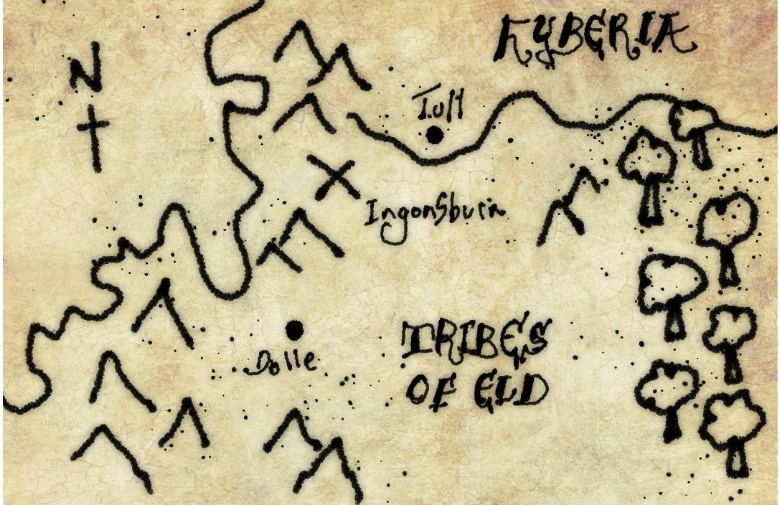
QUESTION: WHERE IS INGONSBURN?
In the previous blog Ben Cann asked where Ingonsburn, featured heavily in our latest crowd funding campaign, was and why it seemed incongruous to the rest of Hyberia?
Short answer: spoilers! I wrote the article before the Gamefound campaign started and didn’t want to blab anything! Longer answer: If you draw a straight line between Tull and Dolle and head towards the mountains you’re there. It’s in the lowlands which is relatively good farming country although there’s few there to do the farming. Ingonsburn’s fortunes have come and gone, it used to be a tin mine that ran dry. The town’s current thriving atmosphere is very recent, Ingonsburn was mostly deserted before Graam was discovered, encouraging an influx of settlers, some with nothing but robbery in mind. The locals are a hard but honest bunch and bandits are repelled and order is kept with the Hyberian’s own brand of rough justice. Graam is precious and for the first time in its existence Ingonsburn can afford to prosper whereas for a long time it was just a small, shabby mining town without a name.
Next time we’ll be exploring Core Space. In the meantime let me know if there’s anything specific you want to know about the lore of Maladum or Core Space or in the creative process itself, I’ll be happy to answer any questions in later blogs.
Further Links
First post: The Power Struggles of Enveron: pt.1 – The Northern Kingdoms:
An updated map of Enveron in PDF format:

Nigel_J
February 3, 2026 at 4:52 pm
Comment was deleted by user.
Ben Cann
January 3, 2026 at 10:15 am
Thank you for explaining about Ingonsburn. I think I had imagined it as more metropolitan and cultured from the architecture of the buildings (and relative to the rest of Hyberia it is, I imagine). Its new found prosperity explains why enemies would see it as a major target as well.
There are so many rich potential settings for quests and campaigns (both homebrew and official) that we should all be kept entertained for a long time to come!